The short answer: YouTube SEO works, but the rules have changed
YouTube SEO still works today, but if you keep using the tactics you used in 2018, you'll be disappointed. The platform no longer focuses only on keywords sprinkled into the title; it looks at whether the video is actually watched and how much value it gives viewers. In other words, instead of classic "tag optimization", the algorithm evaluates the whole experience.
In the past, many channels tried to win rankings by stuffing tags or writing paragraph after paragraph of keywords into the description. Now YouTube states clearly in its official documentation that it ranks search results on three main elements. The most critical of these, and the one many brands still don't fully understand, is engagement signals.
Here's how the strategy works now: you choose the right topic, win the click with the title and thumbnail, the video holds the viewer in the first few seconds, and chapters and a clear structure carry the person through to the end. This chain of behavior sends a strong message to the algorithm. Your channel then starts appearing more often for similar queries.
YouTube SEO still plays a critical role in this picture. But the focus has shifted. To win today, keyword research alone isn't enough. You need to move forward on these fronts together:
- Topic and title choices that match search intent
- Content structure and delivery that increase watch time
- Consistency between chapters, transcript and description
- Building expertise and trust at the channel level
That's why in 2026 YouTube SEO is no longer "the job of adding keywords to the title". It has become a more holistic optimization process that runs alongside strategic content planning, user experience and channel authority.

How YouTube search ranks videos
To understand where a video will land in search results, first look at what YouTube officially says. On its help page, the platform states clearly that it ranks search results on three main elements: relevance, engagement and quality. This trio is the backbone of the search algorithm, and there are concrete moves you can make for each one.
This framework gives a clear answer to the question "What does YouTube look at?" The more closely the title, tags, description and video content match the query, the higher your relevance. Signals such as how long people watch your video, how many click on it, and comments and likes can contribute to engagement. How expert, consistent and trustworthy your channel looks also feeds into quality signals.
YouTube can also personalize search results. If search and watch history are turned on, two users may see different videos even when they type the same words. If you run an educational channel and your audience often watches guides, your channel's chances of appearing for that audience rise. This also explains the familiar feeling of "I was number one, and then I disappeared."
There's one more important point, especially for brands. YouTube doesn't look only at a single video; it also looks at channel-level signals. When a viewer is happy with one video and subscribes, your visibility for similar content rises too. So rather than one-off viral success, you need to build a content system that performs consistently.
To see this more clearly, it helps to unpack the main factors one by one.
Relevance
Relevance describes how closely your video matches a specific search query. YouTube evaluates the words in the title, description, tags and video content together. If you offer a rambling vlog-style video to someone searching for "YouTube SEO tutorial", your relevance signal stays weak. Having the keyword in the title isn't enough on its own.
The right approach is to decode the intent behind the query. Does the person want a quick checklist, an in-depth analysis or a step-by-step setup? When you structure the content around that intent, your relevance rises naturally.
Engagement
Engagement is often one of the decisive factors in YouTube SEO. The platform pays particular attention to overall user engagement, such as a video's watch time for a particular query. If a video has a high click-through rate but many viewers leave in the first minute, its ranking power can weaken. In the opposite case, a video that gets fewer clicks but high watch time can rise over time.
If you open with an intro that sparks curiosity in the first few seconds, make a clear promise and deliver it chapter by chapter, viewers won't drop off halfway. Asking for comments, making clear calls to action and keeping the visual rhythm lively also support engagement.
Quality
Quality signals help YouTube understand which channels demonstrate expertise, authoritativeness and trustworthiness. Channels that publish regularly, focus on a specific niche and are transparent in their descriptions have an advantage here. For brands in particular, even the layout of the channel page, playlists and the about section create indirect quality signals.
Technical quality matters too. Details such as clear audio, resolution, consistent editing and the use of royalty-free music directly affect the viewer experience. When viewers feel a video is "professional", they're more likely to keep watching.
Personalization
Personalization is the part that confuses most creators. If search and watch history are on, YouTube can take those signals into account too. That means two users may see different results for the same query. You might appear for a user who often watches educational videos but not for someone who mostly watches entertainment.
This makes rank tracking harder. But it also has an upside. The more closely your content themes match your target audience, the more often you'll appear in search results for that audience. That's why clarifying your channel's vision is a critical step.
How chapters, transcripts and a companion article work together
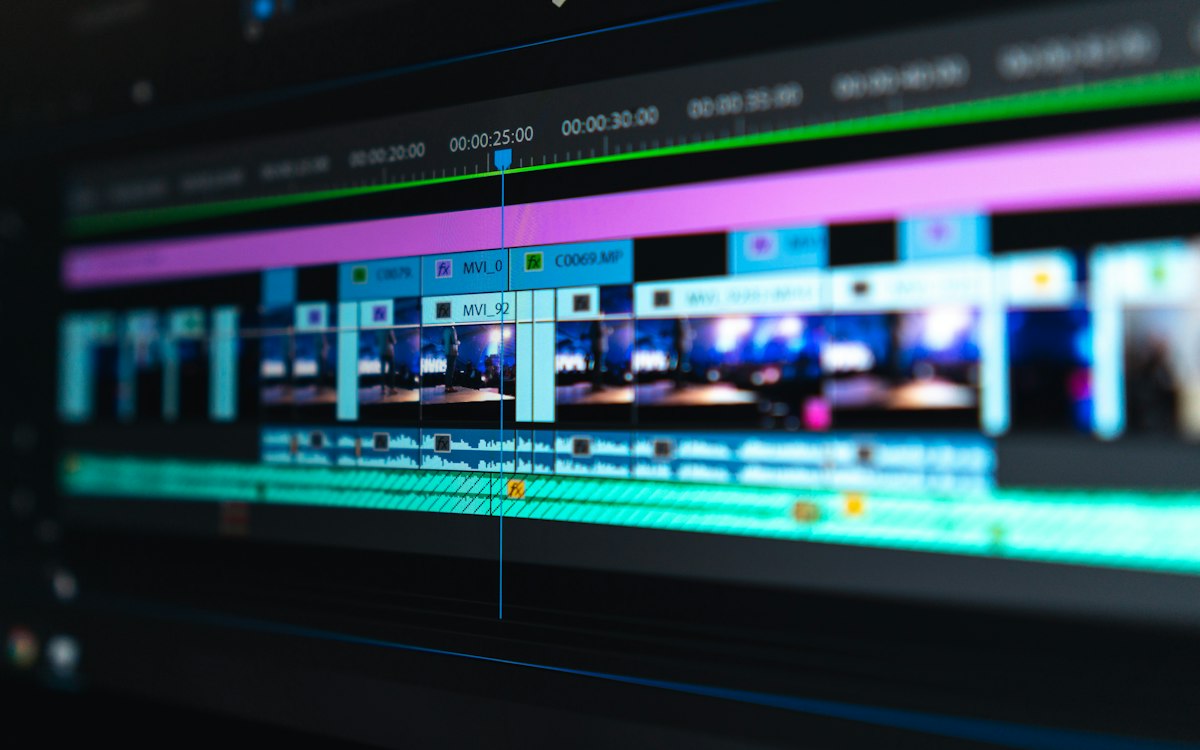
Many brands upload a video and deal only with the title and thumbnail. Yet the part that really makes a difference for YouTube SEO is the layer of text and structure you build around the video. When chapters, transcripts, captions and a companion article work together, you build a strong discovery network on both YouTube and Google. This holistic structure can noticeably increase the visibility of long educational videos in particular.
To add video chapters manually on YouTube, the first timestamp in the description must start at 00:00. You then need at least three timestamps in ascending order, and each chapter must last at least 10 seconds. Automatic chapters are on by default for new uploads, but not every video is eligible. When you plan chapters deliberately, your chances of gaining an extra showcase in search results in the form of "Key moments" go up.
Transcripts and captions bring a two-layer benefit. First, accessibility improves; second, it becomes easier for YouTube and Google to understand the video's content clearly. On technical topics in particular, providing clean text through a caption file strengthens the relevance signal. By reusing the same text in the companion article on your website, you feed two channels with a single production. You can see what other content you can derive from the same video in our template for turning one piece of content into 12.
When you plan this three-part structure, your main goal should be to build multi-layered visibility for a single topic. When users search on YouTube, they should see your video; when they search on Google, they should see both your video and your article. In long-term content strategies especially, this approach also reduces the pressure to produce new content.
Now let's look at each part of this structure separately.
Video chapters and key moments
Video chapters are a practical tool that affects both the viewer experience and YouTube SEO performance. If you add at least three timestamps in ascending order, starting at 00:00, to the description, viewers can navigate the video easily. Remember that each chapter must last at least 10 seconds.
This structure works especially well for long guides. Because viewers can jump to the section they want, they don't abandon the video. It also raises your chances of appearing in an extra row in search results as "Key moments".
Transcripts and captions
A transcript is your video written out word for word. Captions are that text matched to timecodes. When you add these files, YouTube can understand the video's content in more depth. This can strengthen the relevance signal, especially for niche keywords.
Captions are also a big help for people who watch without sound. Many people watch videos with the sound off on public transport or in the office. When you don't lose these viewers, watch time rises naturally.
The companion article
A companion article for the video is a strategic move, especially for brands and content teams. When you also publish the YouTube tutorial as a blog post, you create an extra entry point in Google web search. In this article you can offer a video summary, screenshots and additional resources.
Google's video SEO guidance recommends dedicated watch pages where each video is the main content, along with VideoObject structured data that's consistent with the video. When you embed the YouTube video on your site and add a detailed article next to it, you follow this advice. That raises the visibility chances of both your video and your page.
One topic, two searches: comparing the video and web SERPs
People researching a topic sometimes go straight to YouTube and sometimes search on Google. When you plan your content strategy, you should consider these two SERP structures together. The same "YouTube SEO tutorial" query looks one way in YouTube search and another way in Google web results. Brands that don't understand this difference leave a significant share of potential traffic on the table.
On YouTube, the focus is on video performance and channel signals. Title, thumbnail, watch time and engagement directly affect ranking. In Google web results, elements such as page content, structured data, video sitemaps and key moments come into play. Google's video SEO guidance recommends a separate watch page for each video and consistent VideoObject markup.
Seeing these two areas in a single table makes it easier to build a strategy.
The table below summarizes how you can position the same topic in both YouTube search and Google web results.
| Element | YouTube search | Google web search | What to do |
|---|---|---|---|
| Ranking signals | Relevance, engagement, quality | Content, links, technical factors | Plan for both |
| Title | Clicks and relevance | Snippet and clicks | Write clear, intent-focused titles |
| Description | Context and keywords | Consistency with page text | Summarize the key points |
| Chapters and key moments | Video chapters | Clip, SeekToAction | Add timestamps |
| Transcript | Relevance and accessibility | Source of text content | Produce clean text |
| Thumbnail | Influences the click decision | Shown in video results; needs a stable URL Googlebot can access | Use a thumbnail that shows the promise clearly |
| Structured data | YouTube uses its own metadata | VideoObject, Clip, SeekToAction | Add VideoObject to the watch page on your site |
| Measurement | YouTube Studio | Search Console | Monitor both dashboards together |
Looking at this table, you can see that for a single video you're actually playing to two separate showcases. YouTube search looks at the video's internal performance, while Google asks for additional page-level signals. When you embed the video on your site and offer structured data and a detailed article next to it, you make use of the same content in two different SERPs.
A YouTube SEO checklist for 2026
In the new era, successful channels move forward with a clear checklist instead of uploading at random. YouTube SEO produces measurable results when you act according to plan. The aim here is to put every video through the same quality standard before it goes live. That way both your search performance and your viewer loyalty rise consistently.
A workable checklist for 2026 doesn't focus only on metadata fields. You need a structure that runs from the content outline to the end screen, and from the pinned comment to the playlist. Experienced teams build this list into their project management tools and make clear who is expected to do what for each video. Once your team starts speaking the same language, optimization speeds up.
The items below provide a practical checking framework. When you review this list before every video, the risk of missing critical points drops considerably.
- Is the search intent clear, and does the title reflect it?
- Does the thumbnail clearly show the information it promises?
- Does the intro promise the viewer a concrete benefit?
- Are the video chapters in the description with the correct timestamps?
- Is the transcript or caption file ready and clean?
- Does the description include the key points and relevant links?
- Has the video been added to the right playlist?
- Does the pinned comment include an extra resource or a call to action?
The most important outcome of this list is that every video clears the same quality bar. As the team grows especially, what each person means by "a well-optimized video" can drift. When you make this checklist standard, even new team members can quickly produce content at the same level.
How to measure results
The only way to know whether YouTube SEO is working is to measure systematically. If you look only at view counts, you may make the wrong decisions. If a video gets lots of clicks but low watch time, for example, you may actually be sending a negative signal to the algorithm. That's why you need to read YouTube Studio and Search Console data together.
In YouTube Studio, metrics such as watch time, average percentage viewed and click-through rate are especially important. You can see which search terms people used to find you through YouTube search. If there's a gap between the queries you targeted and the real data, you need to rethink how well your title and content match. If some videos get traffic from unexpected terms, you can add those to your idea pool for new content.
Search Console, meanwhile, helps you understand the performance of videos embedded on your website. It answers questions such as which queries your page gets impressions for, what the click-through rates look like and whether video rich results appear. The video sitemaps and structured data recommended in Google's video SEO guidance help you see clearer results in this dashboard.
To keep measurement manageable, you can use a simple framework. The steps below make it easier to track results regularly.
- Record the publish date and target keyword for each video.
- Note the core metrics at the end of the first 7, 30 and 90 days.
- List your best-performing videos and pull out what they have in common.
- Form hypotheses for updating underperforming videos.
The biggest benefit of this approach is that it lets you make decisions based on data rather than intuition. When you look at the same metrics at regular intervals, you can clearly see which kinds of titles work, which lengths produce better watch time and which topics win subscribers. You can then shape next month's content calendar around last month's concrete results.
The era of AI search: thinking about text, images and video together
The search experience is changing fast with AI features. Many teams are asking, "Is YouTube SEO a waste now? Will AI summarize everything?" The key here is the message in Google's guide to AI features, updated in July 2026. The guide states clearly that no special optimization is needed for these features and that classic SEO best practices remain relevant. You can find what to focus on for the text side, step by step, in our guide to writing content for AI search.
The same guide also stresses that there's no special schema.org markup for AI-powered results. Instead, it recommends supporting your text with high-quality, relevant images and videos. This perspective connects YouTube SEO with classic web SEO. When you cover a topic with both a detailed article and a well-structured video, your chances of being referenced in AI summaries may rise.
What really makes the difference in this era is a multi-format content strategy. When a user types a question, the AI answer may present text and suggest your video or page alongside it. When you pair your YouTube tutorial with an article on your site, your chances of appearing in these suggestion areas rise. Teams that plan text, images and video around the same topic in an integrated way gain the advantage.
In conclusion, AI search doesn't make YouTube SEO obsolete. On the contrary, it makes well-structured videos and pages with clear text content more valuable. As long as you stay true to core SEO principles and produce content that genuinely helps users, new search experiences act as a supporting layer for this work. Which comes first, making the video or distributing it, is discussed in creating vs distributing.
Frequently asked questions
Do tags still matter?
Tags still help, but they aren't decisive on their own. In YouTube SEO, most of the weight comes from how well the title, description and video content fit together. Using a clean, reasonable number of tags, especially to cover spelling variations and closely related terms, is enough.
Do you need to write an article for every video?
It isn't mandatory for every video, but it gives strategic videos strong leverage. For topics with high search traffic potential in particular, a companion article makes it easier to appear in Google web results and gives viewers extra value.
Do you need to optimize videos separately for AI search?
No. According to Google's guidance, no special optimization is needed for AI features. Focus on producing quality text, relevant images and well-structured videos. When you follow classic SEO best practices, you also lay the groundwork for appearing in AI-powered results.